by Alexandra Baybutt
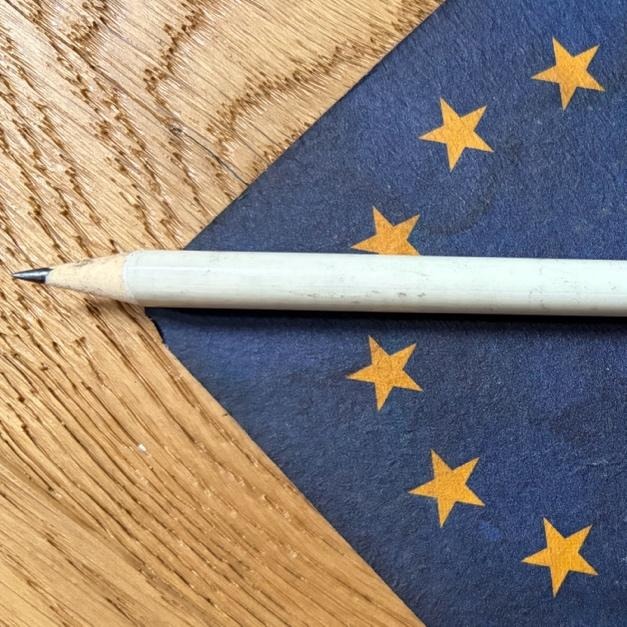
Please read all of Part 1 first.
Part 1: flow, pause, flow
Find something to wind up and unravel. A piece of string or thread is easiest; a strand of hair or a charger cable would also work. You might wind it around a pen, your finger, or itself.
For five minutes or there abouts, wind the string up or around so it’s tighter and the thread is close together, or you can’t see some of the pencil or your finger. Then unwind/unravel it. Move at a pace that feels comfortable to you, a pace that can easily flow.
You could set a timer for five minutes. Or you could just start and see when you feel like five minutes has passed. The timer might ring, but if you want to continue, keep going.
Once you’ve begun, keep going. After a while, think about 2026. What’s been happening, and happening for you during this year? Thoughts, feelings, places, people, activity, inactivity, colours – whatever.
You’ll be in the flow of winding/unravelling, remembering/thinking. Whenever a really vivid, crystalised memory, image or story appears, pause for a moment. In the pause notice the point of suspense. It might be full of feeling, a sensory impression, something else. You don’t need to linger in the pause for long.
Then continue winding and unwinding, moving at comfortable pace. Pause when another memory, image or story arrives strongly.
After a while thinking about 2026 and occasionally pausing, turn your memory to 2016.
Keep winding and unwinding, winding and unravelling, thinking, and pausing anytime there is a clear memory. Stay with 2016 for a while.
Keep going, winding and unravelling. Then think about 2006. Keep going with the same task: winding, pausing, unwinding, thinking, remembering, pausing.
When five minutes is up, or you reach an end, end the flow of winding/unwinding, remembering/pausing, and read onto Part 2.
Now, find a piece of string or thread, and begin Part 1 in practice.
–
Part 2: about liminal separation
There are two uses of the concept ‘liminal’. The first follows anthropologist Victor Turner who describes liminal separation as a transitional phase in a rite of passage, after which you are returned to life outside the ritual, transformed. The ritual is separate from everyday space, time and social role. The return marks a conclusion to the liminal separation, and crossing the threshold is one-way. Turner was observing rituals in contexts of rites of passage, where return after liminal separation meant return to the everyday life of the context, but that a person’s role in it was perceived by others to be different, as well as from inside self-perception. The ritual resulted in a change in status or serious life milestone. You were transformed to meet the new role, or the role was given to you as you transformed. Or it was something you expected of yourself, or were expected to be, do, or show. For example, child to adult. Student to graduate. Group member to leader. A significant moment of social role or status is marked through naming, which might coincide with a visible change in form, or shift of some kind.
The second use of ‘liminal’ that has become more common beyond anthropological analysis refers to a more general in-betweenness, and rather separate from ritual rites of passage about social role or status. The absence of having or including the concluding phase of the ritual that returns you to life outside or separate from the ritual with a sense of transformation means that if such a moment happens, it might not be named or seen by others. It implies that the liminal in-betweenness becomes the permanent state of affairs. To be in the liminal in-betweenness with no resolution seems to imply a continuous phrase or state in itself. There can be suspense without a change in status or life stakes. Whilst maybe there is transformation, it is not so simple or even desirable to note an end. Perhaps there is continual transformation but it can no longer be considered transitional.
These two uses of ‘liminal’ help evoke tensions in noting change and continuity, of experiencing distance and proximity without moving, of belonging that is chosen and belonging that is ascribed. Found in the repeated gesture of winding, unwinding and unravelling is a way to include time felt as a flow and a momentary point within a practical analysis of movement and change. How to talk about unrecognised or recognisable changed? In a pause, if it is not ‘liminal’, how else to describe life lived in the undergoing? How can there be a return when there isn’t something to return to? Is ‘until further notice’ a permanent crisis? A hiatus? An interregnum, the end of a regime or historical era before a new one becomes discernible? Is the pause for a second, a breath, a decade?
–
Part 3: a ritual for the pauses
Think back to your pauses from the winding and unwinding.
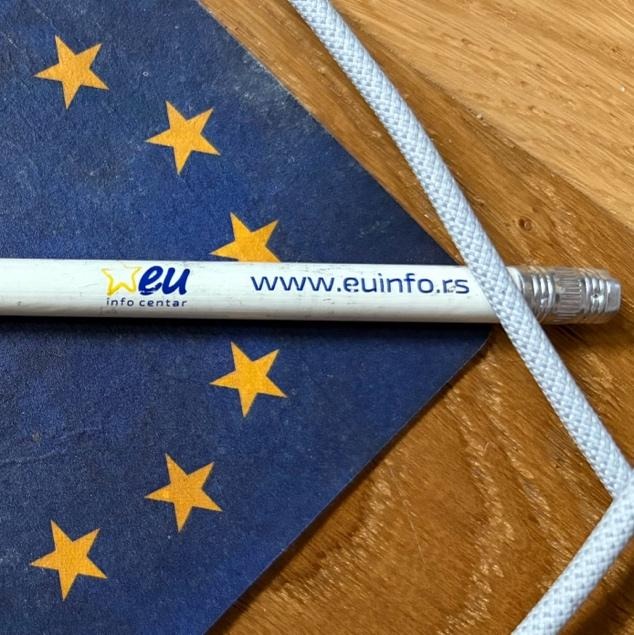
Use the pencil, if you had one, or find one now to list or draw some words, images, shapes that make sense in recalling the pauses. You might find their quality, their relative duration, their intensity, their smell. Pause reading here to list, write, draw, etc until you exhaust the memory of the pauses. Then find a book, place your list at the page number that is your age today. Put the book on a shelf.
(Here is my list:
belonging; role; until told; more expensive, more complicated; dwell; euro and Schengen; car crash; cannot release the weight of the head; flinch; fieldwork; tone; newspapers; Portishead remixes ABBA’s S.O.S.; implications; Labour MP Jo Cox; anti-immigrant emboldened racism; poisonous public sphere; holding breath; diagrams; scarcity; what’s shrinking and growing; what’s not belonging; not synonymous; flags; formally taught; what neighbours; obscure)
–
Part 4: a ritual for imagining
Ritual separation is both spatial and temporal, forming one world inside many worlds of this one world. Part 1 used the decade either side of the UK Brexit referendum vote as a frame for remembering. Repeated winding and unravelling were a way to be in the flow of time whilst thinking back and forward to invoke memory. In ten years from 2026, what then? What flows, points, pauses, suspense and returns might have happened? What else may have been shed, like the next layer snake-skin? Is this a fragile trace? A sigh of relief? What change in role or status might have been chosen, given, forced or otherwise? What roles matter to you, and what can be resisted or made to matter? What rate of change will be indecipherable?
Please pick up winding and unwinding again and think about 2036. Imagine some new pauses, imagine what you might want to recall as pauses. Imagine some more space for time.
Keep going for as long as you wish.
Alexandra Baybutt works in movement art, education and research in the UK and Europe. She remains concerned with space: cellular, social, cosmic. www.alexandrabaybutt.co.uk


1 Comment